At Macri Dental, we approach ceramic crowns as a balance of science and craftsmanship. Advances in dental ceramics allow us to restore teeth in a way that preserves strength, matches natural tooth color and translucency, and feels comfortable in daily function. Our goal is to help you keep your smile healthy and resilient while delivering results that look like your own teeth.
Even the toughest dental enamel can be compromised over time by decay, injury, or wear from habits like grinding. When a filling is no longer the ideal option because too much structure is missing or the tooth requires full coverage for protection, a crown becomes the preferred solution. Ceramic crowns give us the ability to restore form and function while maintaining a natural appearance.
We combine modern materials with precise planning so that each crown is tailored to the tooth's role in your bite and to your cosmetic expectations. From choosing the right ceramic to the final polish, every step is performed with the aim of creating a durable, lifelike restoration that complements your smile.
Patient comfort, thorough communication, and predictable outcomes guide our treatment planning. Whether you are repairing a back tooth for chewing strength or improving the appearance of a front tooth, our team explains the options and walks you through what to expect so you can make an informed decision.
When a crown is the best choice for restoring a tooth
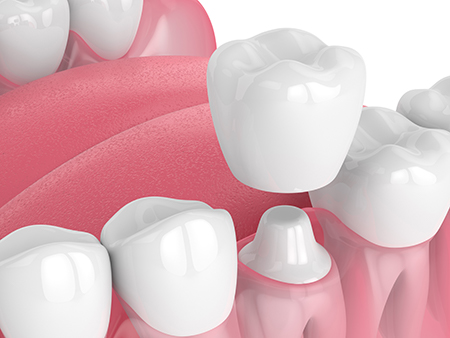
A crown is a full-coverage restoration designed to return a tooth to its proper shape, strength, and appearance. Dentists recommend crowns when a conservative filling would leave the tooth vulnerable, when structural integrity must be re-established, or when a long-term, protective solution is needed. A crown essentially acts as a new outer shell for the damaged tooth.
Common clinical reasons to place a crown include extensive decay that undermines the remaining tooth structure, a fractured or broken tooth that cannot be predictably rebuilt with a filling, or a tooth that has undergone root canal therapy and requires reinforcement. Crowns are also used to restore dental implants and to anchor traditional bridgework.
In addition to restoring function, crowns can correct cosmetic concerns such as misshapen, discolored, or undersized teeth. They are versatile restorations that can address both functional and aesthetic goals in one treatment. Your dentist will evaluate the tooth's condition, occlusion (bite), and surrounding tissues before recommending a crown.
-
To rebuild a tooth with significant decay or structural damage
-
To replace an extensive or broken filling when additional support is needed
-
To restore a dental implant as the final prosthetic crown
-
To serve as the abutment support for a traditional dental bridge
-
To protect and strengthen a tooth after root canal treatment
-
To improve the appearance of an oddly shaped, discolored, or small tooth
-
To correct or accommodate bite-related stresses
How ceramic crowns deliver both beauty and performance
All-ceramic crowns are engineered to mimic the optical properties of natural teeth. Unlike restorations with metal substructures, modern ceramics interact with light similarly to enamel, producing a lifelike translucency and surface luster. This makes them especially well-suited for visible front teeth where aesthetics are a priority.
At the same time, contemporary ceramic materials offer impressive strength and wear resistance. Improvements in ceramic chemistry and manufacturing processes—such as hot-pressed ceramics and CAD/CAM milling—have produced restorations that can withstand the forces of chewing while maintaining their appearance for years.
Ceramic crowns are also biocompatible and metal-free, which reduces the risk of allergic reactions or gray gumlines sometimes seen with metal-based restorations. Their resistance to staining means they can retain a natural color longer, helping maintain a consistent smile even as surrounding teeth change with time.
Because ceramic restorations can often be made thinner than metal-ceramic alternatives, less tooth reduction may be necessary in many cases. This conservative attribute helps preserve more of the natural tooth while still providing the protection a compromised tooth needs.
-
Highly aesthetic — closely matches the translucency and sheen of natural teeth
-
Strong and durable—suitable for many locations in the mouth depending on material choice
-
Metal-free and biocompatible, good for patients with metal sensitivities
-
Resistant to staining and discoloration
-
Can often be fabricated with less removal of healthy tooth structure
-
No visible metal margin at the gumline, improving long-term aesthetics
Selecting the right ceramic material for each situation
Not all ceramic crowns are identical—different materials offer varying balances of translucency, strength, and wear characteristics. The choice depends on the tooth's location, how much force it must withstand, and how closely it must match adjacent teeth. We evaluate these factors to select the best material for a predictable outcome.
Lithium disilicate ceramics are popular where a blend of strength and superior aesthetics is desired, making them a frequent choice for anterior crowns. Monolithic zirconia provides exceptional strength for posterior teeth subject to heavy chewing forces, while newer high-translucency zirconia offers improved aesthetics for areas where appearance matters but durability cannot be compromised.
For particularly delicate cosmetic cases, layered or pressable ceramics like leucite-reinforced porcelain can provide exquisite color depth and surface characterization. Our team considers each material's advantages and limitations, ensuring the selected crown material is appropriate for function, longevity, and smile integration.
-
Lithium Disilicate Porcelain Crowns — balanced strength and beauty
-
Leucite Reinforced Pressable Porcelain Crowns — high cosmetic detail for visible teeth
-
Solid or Monolithic Zirconia — outstanding strength for back teeth and heavy bites
-
High Translucent Zirconia — improved aesthetics with good durability
What to expect during crown treatment
The process begins with a careful examination and discussion of goals. We evaluate X-rays, digital scans, and the surrounding gum and bite relationships to determine whether a crown is the most appropriate option. Clear communication at this stage ensures your expectations align with clinical recommendations.
To prepare the tooth, the dentist removes any decay and shapes the tooth to receive the crown. Modern digital impressions or traditional impressions capture precise details for the laboratory or in-office milling system. A temporary crown may be placed to protect the tooth while the final restoration is being fabricated.
Final crown placement involves try-in, shade verification, and adjustments to ensure the crown fits comfortably and functions harmoniously with the rest of your bite. Once cemented, the restoration is polished and checked for natural movement and contact points. We schedule a follow-up to confirm you are comfortable and the crown is performing as expected.
With proper home care and routine dental visits, ceramic crowns can last many years. Regular checkups allow us to monitor wear, margin integrity, and gum health so any concerns can be addressed early and conservatively.
Why patients choose our practice for ceramic crown care
At our Greenwood Village office, we combine advanced digital tools with careful treatment planning to achieve predictable, aesthetic results. Precision imaging, digital impressions, and in-house or trusted laboratory fabrication allow us to deliver crowns that fit well and blend naturally with your smile.
Our team prioritizes individualized care: we listen to your goals, explain the differences between material options, and tailor the restoration to your unique functional and cosmetic needs. Clinical expertise and a commitment to quality materials ensure each crown is made to last.
Macri Dental brings experience and attention to detail to every restorative case. From diagnosis to final placement, our focus is on durable outcomes that support long-term oral health while meeting your expectations for appearance and comfort.
If you’d like to learn more about ceramic crowns or discuss whether one is the right solution for your tooth, please contact us for more information.