Smiling woman with a blonde bob and tan cardigan showing healthy teeth after periodontal treatment

Dental Bridges

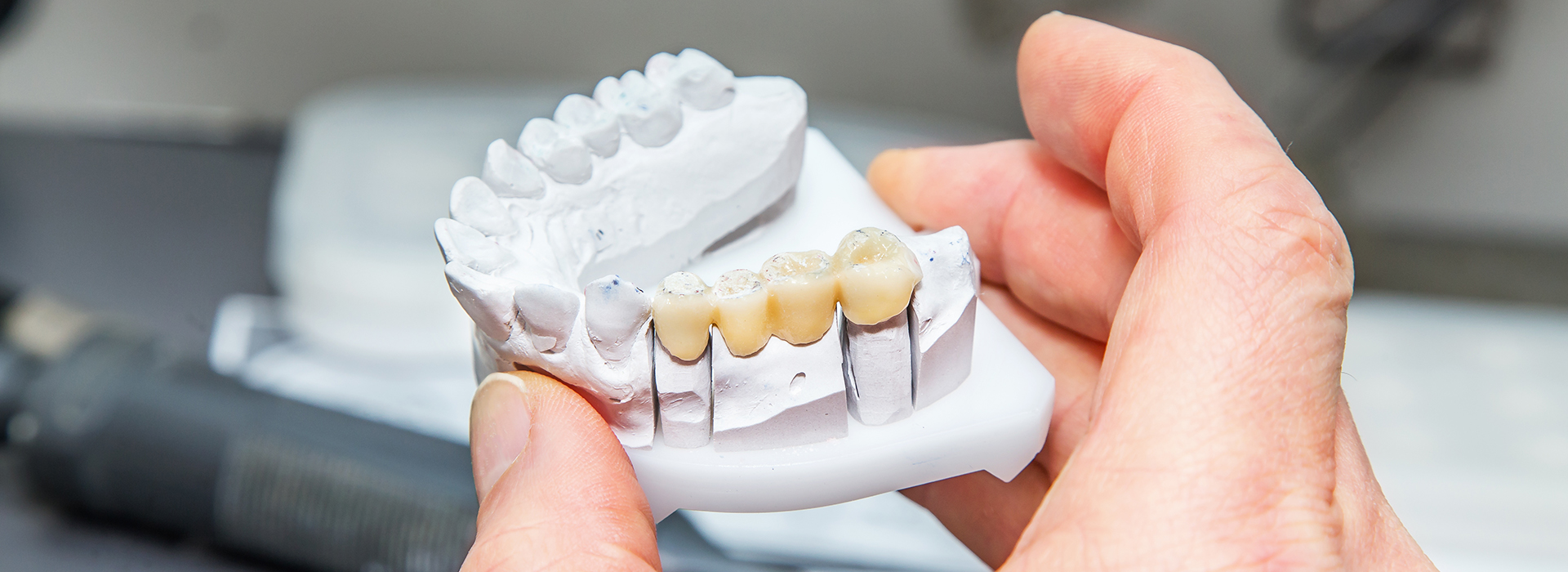
Hand holding a plaster dental model fitted with a three-unit porcelain dental bridge on the lower jaw

Missing teeth change more than your smile — they change the way your jaws work, how you chew, and how confident you feel. Dental bridges are a predictable, long-standing option for restoring a complete, functional bite when one or more teeth are absent. This page explains how modern bridges work, why they matter, the options available, and what to expect before, during, and after treatment. At Macri Dental, we focus on crafting solutions that balance natural appearance with lasting function.

Why replacing a lost tooth matters for long-term oral health

When a tooth is lost, the empty space doesn’t remain harmless. Adjacent teeth begin to drift toward the gap, which can change the alignment of your smile and create new bite problems over time. These shifts increase the risk of uneven wear, bite pain, and difficulty maintaining effective oral hygiene in the affected area.

Beyond shifting, the absence of a tooth reduces normal stimulation to the jawbone beneath it. Over months and years this can lead to bone remodeling and gradual bone loss, which affects facial contours and can complicate later restorative options. Restoring the space preserves the relationship between teeth, bone, and soft tissues.

Functionally, even a single missing tooth can alter how you chew and speak. The remaining teeth often pick up the extra workload, which raises the risk of fractures, loosening, or additional tooth loss. A well-designed bridge restores contact and helps distribute chewing forces more evenly across the dental arch.

How modern bridges are designed and built

A dental bridge replaces missing teeth with an artificial tooth or teeth (pontics) held in place by supports on one or both ends. Those supports can be crowns on adjacent natural teeth or implants serving as anchors. Contemporary materials and digital workflows allow bridges to look highly natural while offering strength and longevity.

Materials commonly used today include high-strength ceramics such as zirconia and layered porcelain for aesthetics where translucency and color matching are important. These materials combine the durability needed for chewing with surface characteristics that mimic natural enamel. Laboratory techniques and CAD/CAM milling enable precise fit and consistent results.

Design is personalized: some bridges are engineered to be ultra-strong for back teeth where forces are greatest, while others emphasize fine color and texture matching for the smile zone. The laboratory and clinical team collaborate on contour, shade, and occlusion so the restoration integrates with your bite and appearance.

Choosing the right type of bridge for your smile

There are several bridge types, and the best choice depends on factors like the number and location of missing teeth, the condition of adjacent teeth, jawbone volume, and long-term goals. Traditional tooth-supported bridges use crowns on neighboring teeth to carry the replacement, making them a good option when adjacent teeth already require crowns or restorations.

Cantilever bridges are a variation where the pontic is supported on only one side; they are used in select situations but require careful planning to avoid overloading the supporting tooth. Resin-bonded (Maryland-style) bridges conserve tooth structure by using a metal or ceramic wing bonded to the back of adjacent teeth — these can be conservative for single front-tooth replacements when bite forces are low.

Implant-supported bridges offer a more conservative approach to neighboring natural teeth because they use implants as anchors instead of crowning adjacent teeth. When bone volume and health allow, implant-supported restorations can support multiple pontics and help preserve bone by restoring functional loading to the jaw.

Preparing your mouth: diagnostics and preliminary care

Successful bridge therapy begins with careful assessment. A thorough clinical exam, digital radiographs, and, when appropriate, 3D imaging are used to evaluate bone levels, root health, and the relationship of the teeth in your bite. These records guide whether a tooth-supported or implant-supported approach is most suitable.

Addressing active dental disease is essential before placing a bridge. Gum inflammation, untreated tooth infections, or unstable restorations must be managed to provide a healthy foundation. In some cases, endodontic treatment, periodontal therapy, or crown replacement is needed first to ensure predictable results.

When implants are part of the plan, additional preparatory steps can include bone grafting or soft tissue procedures to optimize the site. These measures increase the likelihood of long-term success and help achieve a natural emergence profile and tissue contours around the finished restoration.

What to expect during treatment and in the months that follow

The pathway to a finished bridge differs by type. For a traditional bridge, treatment typically involves preparing the supporting teeth, taking impressions or digital scans, placing a temporary restoration, and then seating the final bridge after the laboratory has fabricated it. Minor sensitivity and gum tenderness are common initially and usually settle as you adapt to the restoration.

Implant-supported bridges require surgical placement of implants followed by a healing period while the implants integrate with the bone. During that time a temporary prosthesis can often provide aesthetics and function. Once healing is complete, the final bridge is attached, carefully adjusted for comfortable bite and natural appearance.

After placement, routine maintenance is essential. Daily cleaning around the bridge, attention to flossing or interdental cleaning beneath pontics, and regular professional checkups keep the restoration healthy and functional. Periodic evaluations allow your clinician to monitor fit, occlusion, and surrounding tissues so small adjustments can be made before problems develop.

Bridges remain a dependable solution for replacing missing teeth when planned and executed thoughtfully. If you’d like to explore whether a bridge is the right option for your smile, please contact us to learn more and schedule a consultation.


Frequently Asked Questions

What is a dental bridge?

+

A dental bridge is a fixed prosthetic that replaces one or more missing teeth by spanning the gap with artificial teeth called pontics supported by adjacent teeth or implants. The supports on either side, known as abutments, can be crowns on natural teeth or implant fixtures that anchor the restoration. Bridges restore chewing function, help maintain proper tooth alignment and improve esthetics.

Modern bridges are fabricated from durable ceramic materials such as zirconia or layered porcelain that mimic enamel in color and translucency. Digital impressions and CAD/CAM milling allow precise fits and predictable results. A well-designed bridge balances strength with a natural appearance to integrate seamlessly with surrounding teeth.

Why is it important to replace a missing tooth?

+

Left untreated, a missing tooth can cause neighboring teeth to drift into the empty space, leading to changes in bite and alignment. These shifts increase the risk of uneven wear, jaw pain and difficulty cleaning between teeth, which can accelerate decay and gum disease. Replacing the tooth restores contact points and helps distribute chewing forces more evenly across the dental arch.

The absence of a tooth also reduces normal stimulation to the jawbone, leading over time to bone remodeling and gradual bone loss that can affect facial contours and complicate future restorations. Solutions that restore functional loading, such as bridges or implants, help preserve bone and soft tissue relationships. Early restoration can simplify treatment and help maintain long-term oral health.

What types of dental bridges are available?

+

Several bridge designs are used depending on the location of the gap, the condition of adjacent teeth and the patient's long-term goals. Traditional tooth-supported bridges use crowns on neighboring teeth to carry the pontic and are reliable when adjacent teeth already need restorations. Cantilever bridges support a pontic on only one side and are reserved for specific low-stress situations.

Resin-bonded (Maryland) bridges conserve tooth structure by bonding a metal or ceramic wing to the back of adjacent teeth, making them a conservative option for single front-tooth replacements. Implant-supported bridges use dental implants as anchors and can replace multiple teeth without altering healthy neighboring teeth while also preserving bone. Your dentist will recommend the most appropriate design after evaluating bite forces, tooth health and available bone.

How do I know if I am a good candidate for a dental bridge?

+

A thorough clinical exam, digital radiographs and, when appropriate, 3D imaging help determine candidacy for a bridge by assessing tooth structure, root health and bone volume. If adjacent teeth are strong and free of active disease, a tooth-supported bridge may be suitable; if neighbors are healthy and you wish to avoid altering them, implant-supported options may be preferable. Medical history and oral hygiene habits are also considered to ensure predictable outcomes.

Certain conditions such as uncontrolled gum disease, significant bone loss or poor overall health can affect candidacy until they are managed. In cases where bone volume is insufficient for implants, bone grafting or staged treatment can create a foundation for future implant-supported restorations. A personalized treatment plan outlines recommended preparatory care and timelines so you know what to expect.

What should I expect during a traditional bridge procedure?

+

Treatment typically begins with preparing the abutment teeth by removing a small amount of enamel to make room for crowns, followed by impressions or digital scans to design the bridge. A temporary restoration is placed to protect prepared teeth and maintain esthetics and function while the laboratory fabricates the final bridge. Minor sensitivity and gum tenderness are common early and usually resolve as you adapt to the restoration.

When the final bridge is ready, the dentist checks fit, occlusion and shade before permanently cementing or bonding it in place and making any small adjustments for comfort. You will be given home care instructions and scheduled for follow-up visits to monitor fit and surrounding tissues. With proper maintenance, the restoration should integrate well into your bite and daily routine.

How do implant-supported bridges differ from tooth-supported bridges?

+

Implant-supported bridges are anchored to dental implants that are surgically placed into the jaw and allowed to integrate with bone, while tooth-supported bridges rely on crowns on adjacent natural teeth for support. Because implants restore functional loading to the jaw, they can help preserve bone and avoid the need to alter healthy neighboring teeth. The surgical phase and healing time make implant-supported restorations a more involved process than tooth-supported bridges.

Implant-supported bridges are often preferred for long spans or when adjacent teeth are intact and would be compromised by crowning. However, adequate bone volume and overall health are required for implant placement, and additional procedures such as bone grafting may be necessary to create a stable foundation. Your dentist will review the clinical findings and explain the sequence of surgical and restorative steps if implants are recommended.

How long do dental bridges last, and what affects their longevity?

+

With good oral hygiene and regular professional care, bridges commonly last many years, but longevity varies by material, design and individual factors such as bite forces and wear patterns. High-strength ceramics like zirconia offer durability, and precise fit achieved through digital workflows helps reduce stress on supporting structures. Bruxism, poor hygiene or recurrent decay at abutment teeth can shorten a bridge's lifespan and increase the need for repair or replacement.

Routine dental checkups allow early detection of problems such as marginal leakage, loosening or wear so corrective care can be provided before more extensive treatment is needed. Maintaining healthy gums and addressing any bite issues or parafunctional habits contributes significantly to long-term success. When properly cared for, both tooth-supported and implant-supported bridges can provide predictable function and esthetics.

How should I care for a dental bridge at home?

+

Daily cleaning is essential; clean along the gumline and under the pontic using floss, floss threaders or interdental brushes to remove plaque and prevent decay or gum disease around the abutments. Use a soft-bristled toothbrush and nonabrasive toothpaste to protect the restoration surface, and brush at least twice a day to maintain oral health. If you have difficulty accessing beneath the bridge, your dentist or hygienist can demonstrate the best tools and techniques.

Avoid using excessively hard or sticky foods that can place undue stress on the restoration, and discuss any habits such as grinding with your dentist so appropriate protection, like a night guard, can be considered. Attend regular professional cleanings and exams so the clinician can monitor fit, occlusion and tissue health, and perform maintenance as needed. Promptly report any loosening, persistent sensitivity or changes in bite so those issues can be evaluated and addressed.

What are the common risks and complications associated with dental bridges?

+

Potential complications include decay of abutment teeth, gum inflammation, fracture of the bridge material and loosening of the restoration, each of which can compromise function and require corrective care. Improperly balanced occlusion can lead to premature wear or pain, and recurrent disease around supporting teeth may necessitate more extensive treatment. Understanding these risks helps patients follow preventive measures and recognize early warning signs.

Implant-supported bridges carry surgical risks such as infection, nerve irritation or implant failure in rare cases, and these are managed through careful planning and follow-up. Good overall health, precise surgical technique and attention to postoperative care reduce the likelihood of complications. Your dentist will explain the specific risks relevant to your case and how they will be mitigated.

How does Macri Dental design and plan a bridge to ensure natural appearance and lasting function?

+

At Macri Dental, our approach combines digital diagnostics, careful material selection and laboratory collaboration to design bridges that match shade, contour and occlusion. We use digital radiography, intraoral scanning and CBCT when indicated to evaluate bone, tooth positions and occlusion so the restoration is planned to integrate with your bite. Shade matching, translucency layering and contouring are coordinated with skilled laboratory technicians to achieve a natural result.

Clinical steps include provisional restorations to test esthetics and function, careful adjustments to bite and soft tissue management to shape emergence profiles before final placement. Follow-up assessments and maintenance plans are established so the restoration remains healthy and comfortable over time. Patient education on home care and periodic evaluations help maintain both appearance and function for years to come.

Contact Us

Exceptional Dentistry, Centered Around You

Discover a dental experience built around your comfort, needs, and goals. Our team is here to answer your questions, help you explore your treatment options, and make scheduling your visit simple and convenient. Contact our office today and take the next step toward personalized, high-quality dental care for you and your family.

Office Hours

Monday
9:00 am - 5:00 pm
Tuesday
7:00 am - 4:00 pm
Wednesday
7:00 am - 3:00 pm
Thursday
7:00 am - 2:00 pm