Advances in dental materials and digital techniques have made replacing missing teeth more natural-looking and comfortable than ever. While dental implants and fixed bridgework are permanent options for many patients, removable dentures remain a reliable, versatile solution for restoring a complete, functional smile.
At Macri Dental, we design and fabricate dentures using high-quality materials and careful attention to fit, facial proportion, and function. Our approach focuses on restoring chewing efficiency and speech while preserving a natural appearance that complements each patient’s unique features.
We believe in personalized prosthetic care—listening to a patient’s goals and tailoring treatment to their oral health, lifestyle, and comfort. The information below explains how dentures work, the kinds available, and what to expect throughout treatment.
The wider effects of tooth loss on health and confidence
Losing one or more teeth affects more than just your smile. Gaps in the dentition can change the way your jaw functions, alter the alignment of remaining teeth, and make routine chewing and speaking more difficult. Over time, those changes may contribute to uneven wear, new areas of decay, or additional tooth loss.
There are also aesthetic and social consequences: missing teeth can change facial support and make cheeks or lips appear sunken, which may affect self-confidence. Replacing teeth with a well-designed prosthesis helps restore both appearance and function, supporting nutrition and daily social interactions.
Timely replacement preserves the health of surrounding teeth and bone. Even if you’ve been missing teeth for a while, there are restorative options that can rebuild a complete, comfortable smile. Our team evaluates each case carefully to recommend the best path forward for long-term oral health.
What a denture does — design and day-to-day function
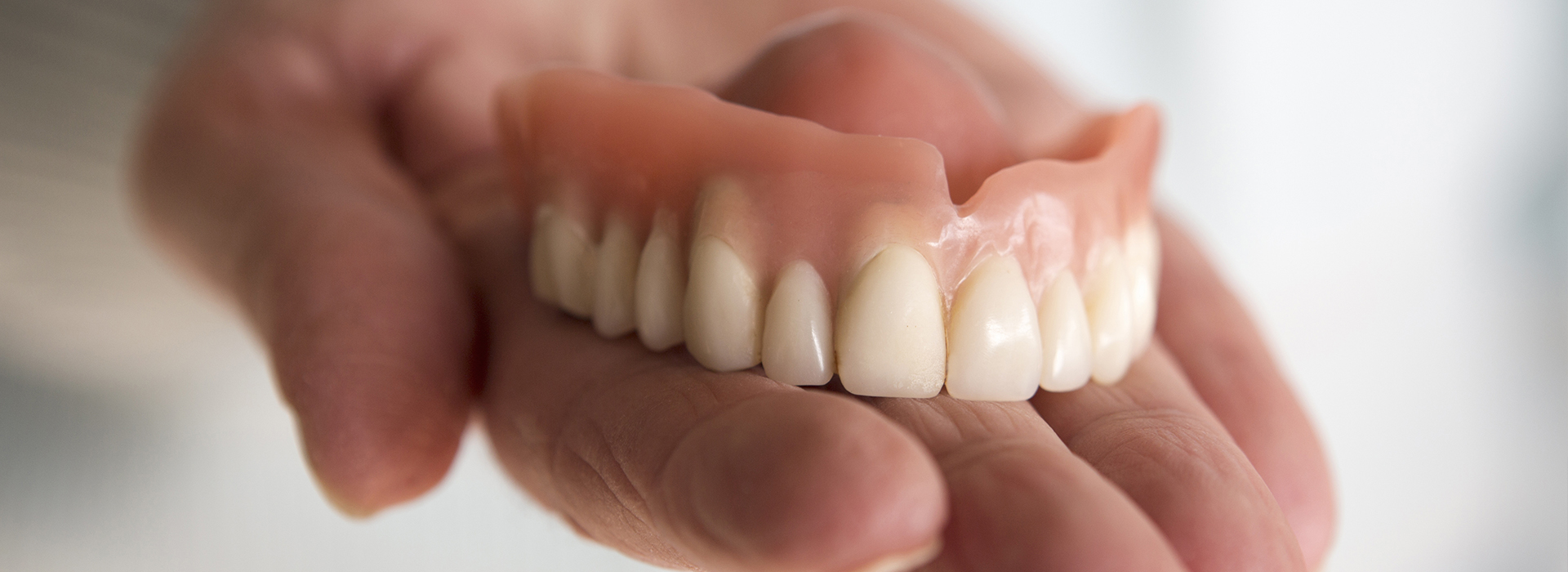
A denture is a removable dental appliance that replaces several or all teeth in an arch. It consists of artificial teeth set into a base that rests on the gums and soft tissues. Modern dentures are shaped to match facial contours and provide balanced support for the lips and cheeks.
Beyond cosmetics, dentures restore essential functions: they help you bite and chew more effectively, support clearer speech, and protect remaining natural teeth from drifting into empty spaces. Because they are removable, dentures can be cleaned outside the mouth, which helps maintain hygiene of both the appliance and the oral tissues.
Depending on the situation, a denture can be worn temporarily right after extractions, or it can be made once tissues have healed for a more precise fit. Some dentures also incorporate attachments that allow them to connect to existing teeth or implants for added stability.
Choosing the right removable solution for your smile
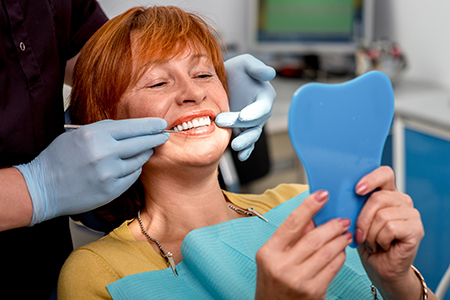
Selecting the most appropriate denture begins with a thorough clinical exam and an understanding of your priorities—comfort, ease of care, or added retention. We assess the health of any remaining teeth, the shape of the gums and jawbone, and overall oral function to design a prosthesis that balances appearance and performance.
There are two main removable categories: full (complete) dentures and partial dentures. A full denture replaces all teeth in an upper or lower arch, while a partial denture fills gaps when some healthy teeth remain. Your care plan will consider whether extractions, tissue preparation, or implant support are advisable before fabrication begins.
Full dentures and how they’re fitted
Full dentures restore an entire arch and can be crafted to match your facial proportions and bite. For many patients, a conventional full denture is made after any remaining teeth are removed and the tissues have healed. This allows for a stable, well-adapted fit once healing is complete.
Variations of complete dentures
-
Immediate dentures
Immediate dentures are placed on the same day extractions are performed so you don’t have to be without teeth during healing. They provide continuity of appearance and function but may require adjustments or a relining as tissues remodel.
-
Overdentures
An overdenture gains extra support from remaining natural teeth prepared as roots or from attachments. This approach preserves bone where possible and improves stability compared with a conventional denture.
-
Implant-supported dentures
Implant-supported options use strategically placed titanium posts to anchor a removable denture. This can dramatically increase retention and chewing efficiency while reducing movement during daily activities.
Partial dentures for selective tooth replacement
Partial dentures replace one or several teeth when enough healthy natural teeth remain to support and retain the appliance. They typically attach with discreet clasps or precision attachments that blend with adjacent teeth for a natural look.
Partial frameworks are available in several materials—cast metal, flexible resin, or hybrid designs—so your clinician can choose the option that best balances strength, comfort, and aesthetics for your mouth.
A properly designed partial denture not only fills visible gaps but also maintains proper tooth position and bite relationships, helping to prevent problems that can arise when teeth shift into empty spaces.
How we plan, craft, and refine a comfortable denture
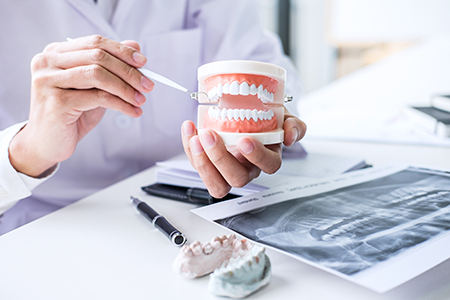
Creating a denture is a step-by-step process that combines diagnostic imaging, digital or physical impressions, and careful aesthetic planning. We review tooth shape, shade, bite alignment, and facial proportions to design a prosthesis that feels and looks natural.
Occasionally, minor surgical procedures or tissue conditioning are recommended to ensure the supporting surfaces will accept a denture comfortably. When implants are part of the plan, precise digital implant planning and placement optimize how the final denture attaches and functions.
Work on a denture often includes try-in appointments where tooth position, bite, and appearance are reviewed before the final prosthesis is finished. Attention to these details helps reduce the need for major adjustments after delivery and results in a more predictable outcome.
Adjusting to a new denture and caring for long-term success
Adapting to a new denture takes practice. At first, you may notice more saliva production and a change in speech or chewing patterns. These responses are common and typically resolve as the muscles of the lips, cheeks, and tongue learn to work with the appliance.
-
Comfort and adjustments
Minor sore spots can occur as you begin wearing a new denture. If an area becomes irritated, wearing the denture until your adjustment appointment helps the clinician identify and relieve the exact spot.
-
Speaking and eating with confidence
Practice helps: reading aloud or starting with soft foods and small bites makes the transition easier. Avoid chewing only on one side and take time to rebuild chewing patterns; most patients regain strong function within a few weeks.
-
Daily care routines
Rinse dentures after meals and brush them daily with a suitable denture brush. Remove the appliance at night to rest the gums and soak it in water or a recommended cleaner when not worn. Also continue to clean any remaining natural teeth and gently care for your gums.
-
Stability and follow-up
If a denture feels loose, adhesives can help temporarily, but long-term stability is best addressed through professional evaluation. Implant attachments, relines, or adjustments may be recommended as tissues change over time. Regular checkups allow us to monitor fit, oral health, and the condition of the denture.
We are committed to delivering thoughtful prosthetic care that restores function and enhances quality of life. If you have questions about whether dentures are the right option for you, our team is happy to explain the choices and guide you toward a solution that meets your needs.
Contact Macri Dental to learn more about denture options or to schedule a consultation with our team.