Smiling woman with a blonde bob and tan cardigan showing healthy teeth after periodontal treatment

Veneers

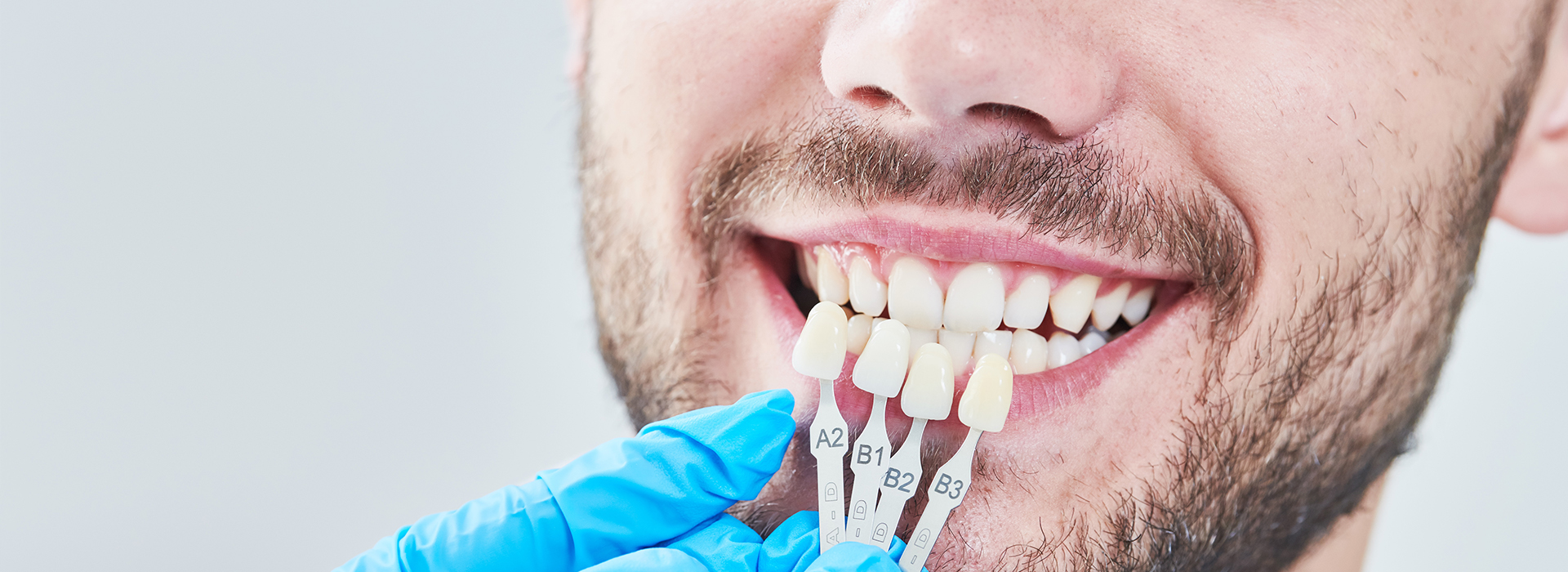
Gloved hand holding tooth shade samples A2 to B3 beside a smiling bearded man's teeth to match porcelain veneers

A confident smile is more than a feeling — it shapes how others perceive you and how you present yourself to the world. When small imperfections stand between you and the smile you want, veneers offer a refined, conservative way to transform appearance without altering who you are. Below, we explain the purpose, process, and long-term care of veneers so you can decide whether they’re the right option for your smile goals.

Why veneers are a dependable cosmetic choice

Veneers are designed to address a range of common concerns that affect the front teeth: stains that don't respond to whitening, minor chips, uneven edges, slight gaps, and subtle misalignment. Because veneers cover the tooth surface, they can provide an immediate and cohesive improvement in color, shape, and symmetry that often looks more uniform than isolated treatments alone.

Unlike more invasive restorative options, veneers preserve much of the natural tooth structure. This conservative approach appeals to patients who want meaningful cosmetic change without extensive alteration. Veneers can be an efficient way to create a balanced smile when the visible teeth are the primary focus.

Another reason veneers are widely recommended is their versatility. Whether the goal is to correct a single blemish or harmonize multiple front teeth, veneers are customizable in shade, translucency, and contour to match adjacent teeth and the patient’s facial features for a natural result.

What a veneer actually is — materials and fundamentals

At their core, veneers are very thin shells that adhere to the front surfaces of teeth. The most common material used is high-quality dental porcelain because it closely mimics the way natural enamel reflects light and resists staining. Composite resin veneers are another option; they are applied and sculpted directly in the mouth and can be a conservative choice in select situations.

Porcelain veneers are custom-made in a dental laboratory to match the precise shape and color requested by the patient and clinician. The lab process allows for meticulous control over shade, translucency, and surface finish, which contributes to a highly lifelike appearance. Composite veneers, while more immediate, rely on in-office artistry to achieve comparable esthetics.

Both types are bonded to the tooth using modern adhesive systems that create a durable connection with minimal removal of healthy enamel. The result is an enhanced appearance that maintains the feel of a natural tooth while improving visible shape and shade.

How we develop a personalized veneer plan

An effective veneer outcome begins with a thoughtful plan tailored to the patient's facial proportions, dental health, and aesthetic goals. During the initial consultation we discuss what you want to change, evaluate bite and gum health, and examine the underlying tooth structure to confirm veneers are appropriate and sustainable for your situation.

Digital imaging and photographs play a valuable role in treatment planning. These tools help visualize potential changes and allow you to preview shade and shape before any irreversible steps are taken. When porcelain veneers are chosen, the shade selection and design are confirmed in collaboration with the dental laboratory to ensure a cohesive, natural result.

In some cases, minimally invasive adjustments — such as minor enamel recontouring or orthodontic alignment — may be recommended before veneer placement to optimize aesthetics and longevity. Our approach focuses on long-term oral health as much as immediate cosmetic change, so every plan balances appearance with functional stability.

The veneer process: what happens during treatment

The veneer journey generally unfolds in a series of predictable steps that keep surprises to a minimum. After the consultation and planning stage, tooth preparation involves gently removing a small amount of enamel from the front surface so the veneer will sit flush with adjacent teeth. This preparation is intentionally conservative to preserve natural structure.

Once the teeth are prepared, an impression or digital scan captures exact tooth dimensions. For porcelain veneers, those specifications are sent to a skilled dental laboratory where technicians craft each veneer to the agreed-upon design. While the permanent veneers are being made, temporary facings may be used to protect the prepared teeth and allow you to live comfortably with the proposed changes.

When the final veneers return from the laboratory, the dentist checks fit, shape, and color in the mouth and makes any small refinements. Bonding is the last step: the veneer is carefully adhered to the tooth using a reliable adhesive system, and any finishing touches are completed to ensure a natural contour and comfortable bite.

Maintaining veneers so your smile stays its best

Caring for veneers is straightforward and closely mirrors good natural-tooth care. Daily brushing with a non-abrasive toothpaste, regular flossing, and routine dental visits help preserve both the veneers and the supporting teeth. Professional cleanings and check-ups allow the dental team to monitor the integrity of the bond and the health of surrounding gums.

A few common-sense habits can protect your investment: avoid using teeth as tools to open packages, refrain from biting into very hard items with veneered teeth, and discuss any nighttime grinding with your dentist. If grinding is present, a custom night guard can reduce stress on both veneers and natural teeth.

If a veneer becomes chipped or otherwise compromised, many issues can be repaired or replaced without impacting the rest of your smile. With proper daily care and routine dental oversight, veneers can retain their appearance and function for many years.

At Macri Dental, our goal is to help you choose the most durable and natural-looking option for your smile. If you’d like to learn whether veneers are a good fit for your objectives, please contact us to schedule a consultation or to request more information.


Frequently Asked Questions

What are dental veneers and how do they work?

+

Dental veneers are thin shells bonded to the front surfaces of teeth to improve appearance, shape and color. They are primarily used on the visible front teeth to mask stains, chips, gaps and minor misalignment. Veneers create a uniform, natural-looking front surface that enhances smile symmetry. Because they cover only the tooth face, veneers preserve more of the natural tooth than full-coverage restorations.

Modern veneers are typically made of high-quality dental porcelain or composite resin, each attached with strong adhesive systems. Porcelain mimics enamel translucency and resists staining, while composite veneers are sculpted directly and may require less initial tooth alteration. Both types rely on precise bonding protocols to ensure durability and a lifelike appearance.

Who is a good candidate for veneers?

+

Good candidates for veneers generally have healthy teeth and gums, localized cosmetic concerns, and realistic expectations about outcomes. Veneers are suited for patients with persistent discoloration, small chips, uneven tooth length or minor gaps that primarily affect the front teeth. Active tooth decay, untreated gum disease or insufficient enamel must be addressed before veneers are considered. A comprehensive exam helps determine whether veneers are the best long-term option.

Some situations benefit from alternatives such as orthodontic alignment, bonding, or crowns depending on functional needs and the amount of tooth structure involved. At Macri Dental we evaluate bite, periodontal health and underlying tooth structure to recommend the most appropriate restorative pathway. Treatment is individualized to balance esthetics with durable oral function.

What materials are used for veneers and how do they differ?

+

Porcelain and composite resin are the two main materials used for veneers, each with distinct properties. Porcelain veneers are fabricated in a dental laboratory and are prized for their ability to reproduce enamel-like translucency and surface luster. Composite resin veneers are placed directly in the mouth and rely on the clinician’s artistry to shape and polish the material. Material choice depends on esthetic goals, tooth condition and the clinician’s assessment.

Porcelain tends to offer superior long-term stain resistance and optical characteristics, while composites can be repaired more easily in the office if a minor chip occurs. Both materials bond to enamel using contemporary adhesive systems that minimize the need for extensive tooth reduction. Discussing material options with your dentist ensures the selected veneer type matches your priorities for appearance and preservation of tooth structure.

What does the veneer treatment planning process involve?

+

Treatment planning begins with a detailed consultation that includes oral examination, photographs and often digital scans to evaluate tooth proportions and bite relationships. Digital imaging and mock-ups allow patients to preview proposed changes and refine shape and shade before irreversible steps are taken. Evaluating gum levels, occlusion and the health of adjacent teeth is essential to a predictable result.

When porcelain veneers are selected, laboratory communication is a critical component of the plan to ensure accurate shade, translucency and anatomy. In some cases, preliminary procedures such as minor enamel recontouring, gum recontouring or orthodontic movement are recommended to optimize both esthetics and longevity. A coordinated plan focuses on creating a harmonious smile while preserving oral health.

What can I expect during the veneer procedure and timeline?

+

The veneer process typically involves tooth preparation, impressions or digital scans, fabrication of the veneers, and final bonding. Preparation usually requires removing a conservative layer of enamel from the tooth front so the veneer sits flush with neighboring teeth and maintains proper bite relationships. Temporary facings may be placed while laboratory-made porcelain veneers are fabricated, allowing you to test the proposed changes. For directly placed composite veneers, the process can often be completed in a single appointment.

At the bonding visit the dentist verifies fit, color and contour before using adhesive systems to secure each veneer to the prepared tooth surface. Final adjustments refine occlusion and polish margins to ensure comfort and a natural appearance. Overall treatment timelines vary with material choice and complexity but are planned to minimize surprises.

Will I experience pain or sensitivity after getting veneers?

+

Most patients experience minimal discomfort during veneer preparation because local anesthesia is used when enamel is shaped. After treatment some teeth may feel temporarily sensitive to hot, cold or pressure as the tissues adapt to the changes. Sensitivity usually diminishes over days to weeks as the bonding interfaces stabilize.

Over-the-counter pain relievers and avoiding extremely hot or cold foods for a short period help manage any postoperative sensitivity. If sensitivity persists or increases, it can indicate underlying issues such as marginal gaps or decay and should be evaluated promptly. Effective preoperative planning and bonding technique reduce the likelihood of prolonged sensitivity.

How should I care for my veneers to maximize their lifespan?

+

Daily oral hygiene is the foundation of long-lasting veneers: brush twice daily with a non-abrasive toothpaste and floss gently to maintain healthy gums and supporting teeth. Regular dental visits for professional cleanings and exams allow the dentist to monitor margins and the integrity of the bond. Maintaining good periodontal health directly supports the longevity of veneered teeth.

Avoid using your teeth as tools, biting directly into very hard foods and habits that place excessive force on the front teeth, as these actions can chip or displace veneers. If you clench or grind, a custom night guard can protect both veneers and natural teeth from undue stress. Promptly addressing any chips or loose veneers reduces the chance of more extensive treatment later.

Can veneers be whitened or color-matched later?

+

Veneer materials, particularly porcelain, do not respond to traditional whitening treatments the way natural enamel does. Whitening natural teeth after veneer placement can create a mismatch between existing restorations and adjacent tooth color. For this reason, color planning is typically completed before final veneer fabrication.

If a color change is desired later, options include replacing the affected veneers or selectively addressing natural teeth to harmonize shade, depending on the situation and material. Discussing shade stability and long-term color expectations during planning helps prevent surprises. In-office esthetic refinements and polishing can sometimes improve surface appearance, but true color alteration of a porcelain veneer requires laboratory replacement.

What are the possible risks or complications with veneers?

+

As with any dental restoration, veneers carry potential risks such as chipping, debonding, marginal staining, gum irritation or the development of decay at the preparation margins. Thorough assessment and proper case selection reduce these risks by confirming sufficient enamel and stable occlusion before treatment. Precision in preparation, bonding and margin finishing minimizes the chances of long-term complications.

Patients with heavy bite forces or severe bruxism may need adjunctive measures like occlusal guards or alternative restorations to manage risk. When problems occur, many issues can be repaired in-office if detected early, while more extensive damage may require replacement of the veneer. Regular dental examinations allow early detection and prompt intervention to preserve both esthetics and function.

How do I schedule a consultation for veneers?

+

To schedule a consultation for veneers, call Macri Dental at (303) 225-8306 for new patients or (303) 694-0585 for existing patients, or visit the office at 5420 S Quebec St, Ste 203, Greenwood Village, CO 80111. During the consultation the dentist will review your goals, examine your oral health and discuss material options and treatment sequencing. Bringing recent dental records or x-rays can streamline the evaluation.

A focused consultation clarifies whether veneers are the best option or if alternative treatments better suit your functional needs. The dental team will outline recommended next steps and the expected sequence of appointments so you have a clear plan. If you have questions about preparation, maintenance or expected outcomes, raise them during the visit so the team can tailor the approach to your priorities.

Contact Us

Exceptional Dentistry, Centered Around You

Discover a dental experience built around your comfort, needs, and goals. Our team is here to answer your questions, help you explore your treatment options, and make scheduling your visit simple and convenient. Contact our office today and take the next step toward personalized, high-quality dental care for you and your family.

Office Hours

Monday
9:00 am - 5:00 pm
Tuesday
7:00 am - 4:00 pm
Wednesday
7:00 am - 3:00 pm
Thursday
7:00 am - 2:00 pm