Smiling woman with a blonde bob and tan cardigan showing healthy teeth after periodontal treatment

3D Printing

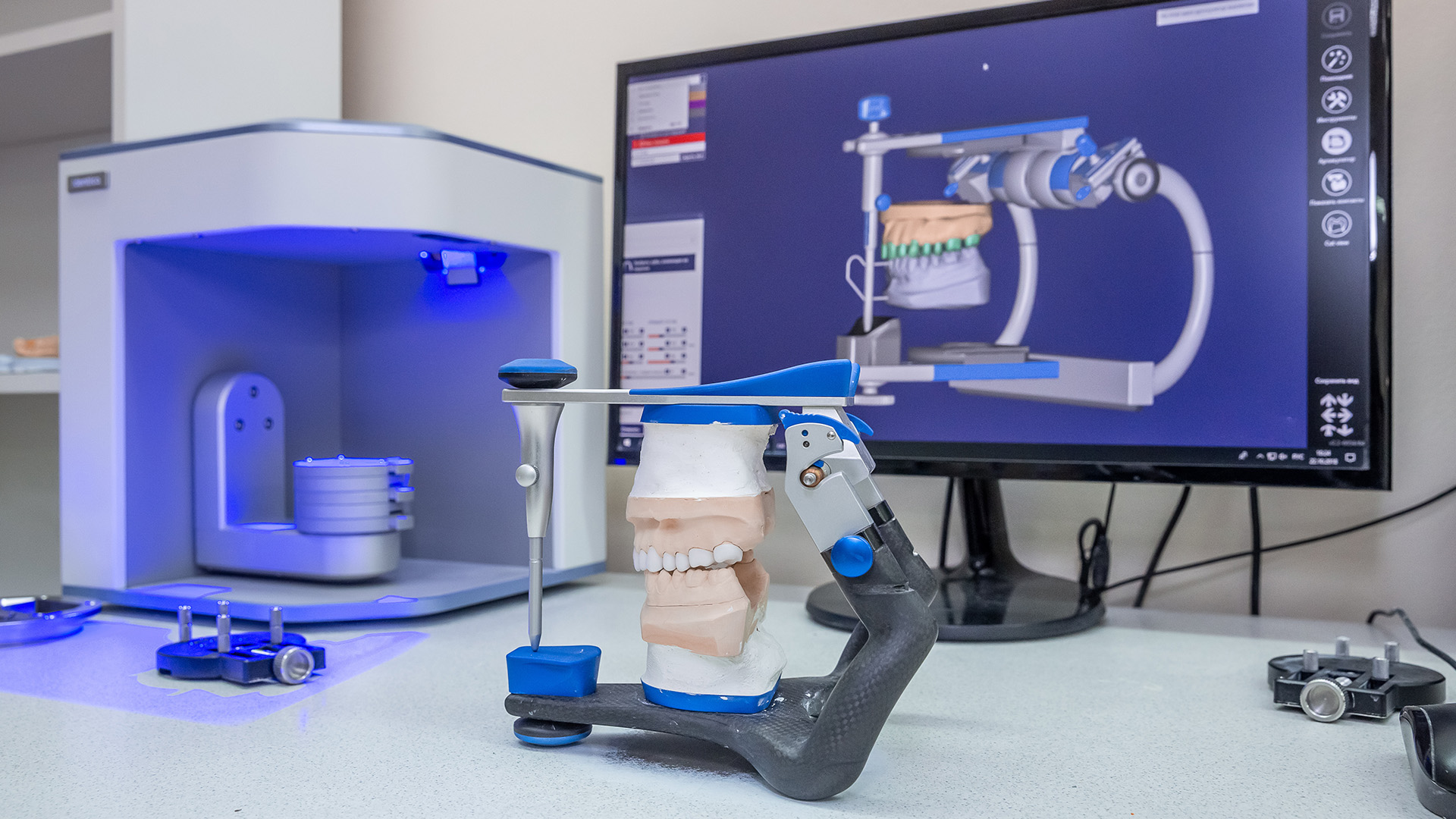
Dental articulator holding plaster tooth models in front of a 3D scanner and a monitor showing a digital bite model

Bringing precision dentistry in-house

At Macri Dental, 3D printing has changed how we plan and deliver many common dental services. By integrating digital design and in-office fabrication, clinicians gain tighter control over every step of treatment — from the initial scan to the finished appliance. This shift reduces dependence on external labs for certain components and allows the clinical team to tailor workflows to each patient's needs, improving consistency and predictability without adding complexity for the patient.

Because the process is digital from the start, data flows cleanly between scanning, design, and printing. That means fewer opportunities for human error introduced by manual impressions or physical shipping. For patients, the practical benefits are less chair time and fewer steps to receive the devices they need. For the team, it means treatments can be planned and executed with greater confidence, backed by precise, reproducible digital records.

Importantly, bringing fabrication into the office does not replace partnerships with specialty labs when their capabilities are required. Instead, in-office 3D printing complements those collaborations by handling many same-day needs and prototyping tasks while preserving the option to send final restorations to trusted lab partners when indicated.

How digital scans replace traditional impressions

Digital intraoral scanning is the starting point for modern 3D workflows. Instead of using impression material to capture a negative mold, clinicians use a handheld scanner to create a high-resolution 3D model of the patient's teeth and soft tissues. The result is a detailed digital file that can be reviewed, adjusted, and archived without the physical storage demands of plaster models or impression trays.

For patients, the difference is often comfort and convenience. Scanning eliminates the gag-inducing trays and mushy materials that some people find unpleasant, and scans are typically faster and easier to tolerate. From a clinical standpoint, digital files are easier to share, allowing the team to annotate specific concerns, verify margins, and simulate treatment outcomes before any physical material is produced.

Once generated, the scan becomes a durable part of the patient's record. It can be used to reproduce models on demand, create appliances, or plan surgical procedures. The ability to store and retrieve precise digital representations of the mouth streamlines follow-up care and simplifies communication among clinicians when more complex care is needed.

Printing models, appliances, and surgical guides

3D printers in the dental office are versatile tools. They can produce study models for case planning, try-in prototypes for restorations, splints and night guards, occlusal devices, and even surgical guides used during implant placement. Each printed item is fabricated from materials designed for dental applications, chosen for properties such as dimensional stability and surface detail.

Because printers can reproduce fine detail, printed models allow dentists to evaluate contacts, occlusion, and fit before committing to a final restoration. For appliances that contact soft tissues or teeth, modern dental resins provide the accuracy and surface finish necessary for clinical use. In cases where a final, long-term restoration is required, printed prototypes help verify anatomy and aesthetics before producing the definitive piece.

Printing surgical guides is another important application. Guides based on the patient's own anatomy support precise implant placement by translating virtual treatment plans into physical aids. When used alongside three-dimensional imaging and careful clinical planning, these guides contribute to safer, more predictable surgical outcomes.

Faster repairs and patient-centered convenience

One of the most tangible benefits of on-site 3D printing is speed. When a patient loses a temporary appliance, needs a replacement night guard, or requires a rapid repair, the practice can often produce what’s needed without sending impressions off-site and waiting for conventional lab turnaround. That responsiveness reduces disruption to the patient's life and often prevents the need for repeat appointments.

The workflow also supports streamlined communication. Because designs are completed digitally, clinicians can make real-time adjustments and explain options to patients using the same models displayed on-screen. If a printed item requires refinement, adjustments are handled quickly in the design file and printed again with minimal delay, allowing the practice to maintain quality while accelerating delivery.

While not every situation calls for an immediate print, having the capability in-house adds flexibility to treatment planning. It empowers the clinical team to prioritize patient comfort and continuity of care, focusing on timely solutions that keep patients functional and confident while longer-term restorations are finalized if necessary.

Quality, safety, and ongoing innovation

Clinical 3D printing involves more than a machine and a digital file; it requires validated materials, established protocols, and trained staff. Dental resins undergo specific testing for biocompatibility and mechanical properties, and the practice follows manufacturer guidelines for post-processing, curing, and cleaning to ensure printed devices meet clinical standards. Regular maintenance and calibration of equipment further preserve accuracy over time.

Infection control and traceability are built into the workflow. Printed items intended for intraoral use are handled with the same sterile practices applied to other dental instruments and appliances. Digital records provide an audit trail, linking each printed device to the originating scan, design file, and patient's chart — a level of documentation that supports consistent care and simplifies future adjustments.

The technology is also evolving quickly. New materials, faster printers, and more intuitive design software expand what can be done in-office while improving predictability. The practice stays current by investing in ongoing training and by evaluating innovations that enhance patient outcomes, ensuring that in-house printing remains a safe, effective adjunct to traditional dental services.

Summary and next steps

In-office 3D printing brings a new level of precision, speed, and patient-centered convenience to modern dental care. By pairing accurate digital scans with carefully selected materials and validated workflows, the practice can produce a wide range of models, appliances, and guides that support better planning and faster delivery. These capabilities enhance patient comfort and provide clinicians with reliable tools to refine treatment before final restorations are placed.

If you have questions about how 3D printing could affect your care or would like to learn more about the technologies we use, please contact us for more information. Our team is happy to explain the process and discuss how digital workflows may benefit your treatment.
Frequently Asked Questions

What is 3D printing in dentistry?

+

3D printing in dentistry is an in-office manufacturing process that builds physical dental components from digital designs layer by layer. It begins with a high-resolution intraoral scan or a digital model, moves through computer-aided design, and ends with a printed object made from materials formulated for dental use. This technology lets clinicians produce study models, prototypes, appliances, and guides with a level of precision that complements traditional laboratory workflows.

Because the workflow is digital from the start, the printed output is directly traceable to the original scan and design file, which improves recordkeeping and reproducibility. Clinicians can use prints to verify fit, occlusion, and anatomy before final restorations are produced, reducing uncertainty during treatment planning. The result is a tighter integration between diagnostics, planning, and fabrication that supports predictable clinical outcomes.

How does in-office 3D printing improve treatment planning?

+

In-office 3D printing gives clinicians more direct control over the transition from digital planning to physical verification, which shortens feedback loops and reduces opportunities for error. Digital files can be reviewed, adjusted, and reprinted quickly, allowing the care team to refine an appliance or guide before committing to a final restoration. This capability supports more confident decision-making and clearer documentation of each stage of care.

Printed prototypes and models also enhance communication with patients by making treatment concepts tangible and easier to visualize during consultations. When a patient can see and feel a prototype, clinicians can discuss fit, aesthetics, and sequence of care more effectively, which helps set realistic expectations and fosters shared decision-making. That patient-centered dialogue often leads to smoother treatment delivery.

What types of dental devices can be produced with 3D printers?

+

Dental 3D printers are versatile and can produce study models, try-in prototypes, occlusal splints, night guards, temporary crowns, provisional bridges, and surgical guides. Many intraoral appliances that require accurate anatomy and fine detail are well suited to modern dental resins, while study models and prototypes help verify contacts and occlusion ahead of final fabrication. The variety of applications makes in-office printing valuable for both restorative and surgical workflows.

That said, clinicians evaluate each case to determine whether a printed device is appropriate for long-term intraoral use or best suited as a prototype or temporary solution. For definitive, complex restorations that demand specialized materials or laboratory finishing, the printed parts often serve as verification tools before sending work to trusted lab partners. This hybrid approach balances speed and convenience with the material and aesthetic standards required for final restorations.

How do digital scans replace traditional impressions?

+

Digital intraoral scanning captures a detailed three-dimensional representation of teeth and soft tissues without the need for impression trays and molding materials. Scans are typically faster and more comfortable for patients, eliminate the risk of distorted impressions due to material handling, and produce files that can be reviewed, annotated, and archived indefinitely. The digital format also simplifies sharing with other clinicians or laboratory partners when collaborative care is required.

Once a scan is captured, it becomes a durable record that can be used to reproduce models on demand, create appliances, or guide surgical planning. Digital files reduce physical storage needs and allow the clinical team to simulate outcomes and verify margins before printing or fabrication. This streamlined approach improves efficiency while maintaining a high level of diagnostic detail.

Are 3D-printed surgical guides safe and accurate?

+

When produced from validated digital planning and combined with three-dimensional imaging such as CBCT, surgical guides can be highly accurate aids for implant placement and other guided procedures. The guide translates a virtual treatment plan into a physical tool that helps control drill angulation, depth, and position relative to the patient's anatomy. Careful co-registration of the scan and imaging data is essential to ensure the guide reflects the planned surgical outcome.

Safety and accuracy also depend on proper material selection, post-processing, and clinician training. Guides intended for surgical use are handled with strict sterilization and traceability protocols, and the practice follows manufacturer and clinical guidelines for verification before use. When these steps are observed, printed guides can contribute to safer, more predictable surgical procedures.

How does 3D printing speed up repairs and same-day services?

+

On-site 3D printing can dramatically shorten turnaround for temporary repairs, replacement night guards, and provisional devices by eliminating the need to ship impressions to an off-site lab. Designs can be produced or adjusted digitally and printed the same day, which reduces the number of appointments a patient might need and restores function quickly. This responsiveness is particularly beneficial when a temporary appliance is lost or a rapid in-office solution is required.

The iterative nature of digital design also supports efficient refinement: if a printed device needs modification, clinicians update the file and reprint with minimal delay. That workflow preserves quality while minimizing disruption to the patient's schedule, allowing the team to prioritize comfort and continuity of care during transitional stages of treatment.

What materials and protocols ensure quality and safety for printed dental devices?

+

Quality and safety begin with using dental-specific resins and materials that meet biocompatibility and mechanical performance standards for their intended use. The practice follows manufacturer recommendations for post-processing steps such as washing, curing, and finishing, and adheres to established infection control protocols for any item that will contact soft tissues or be used intraorally. Regular equipment calibration and preventive maintenance preserve dimensional accuracy over time.

Staff training and validated workflows are equally important for consistent outcomes, and digital records provide traceability from the original scan through design and final fabrication. That audit trail links each printed device to the patient chart and supports future adjustments or remakes while demonstrating adherence to clinical governance standards. Together, material selection, processing protocols, and documentation form the foundation of a safe in-office printing program.

How does 3D printing integrate with CBCT and digital implant planning?

+

3D printing works closely with CBCT imaging and digital implant planning by turning three-dimensional diagnostic data into physical guides and models that reflect patient anatomy. CBCT provides the spatial relationships of bone, nerves, and adjacent structures, while intraoral scans supply precise surface anatomy; integrating these datasets enables accurate virtual implant placement. From that virtual plan, clinicians can design and print surgical guides that translate the digital strategy into controlled clinical execution.

When used together, these technologies support safer implant surgery by improving preoperative visualization, allowing prosthetically driven implant positioning, and reducing intraoperative guesswork. The result is a coordinated workflow where imaging, planning, and printing work as complementary tools to enhance precision and predictability in implant cases.

Will in-office 3D printing replace dental laboratories?

+

In-office 3D printing is a powerful complement to laboratory services but does not eliminate the need for specialty labs in many cases. The technology excels at prototyping, same-day appliances, and surgical guides, while full-contour, highly esthetic, or materially specialized final restorations often still benefit from laboratory fabrication and finishing. Collaboration between the practice and trusted lab partners preserves the advantages of both in-house speed and external expertise.

Clinicians decide on a case-by-case basis whether a printed item will serve as the definitive restoration or as a verification/prototype step prior to sending the case to a lab. This hybrid approach maintains high standards of fit and aesthetics while leveraging in-office capabilities to reduce turnaround time and improve planning confidence.

How can I learn more about 3D printing options for my dental care?

+

If you are curious about how 3D printing might apply to your treatment, the office of Macri Dental can evaluate your needs during a consultation and explain the digital workflow step by step. A consultation typically includes a review of your concerns, digital scanning when appropriate, and a discussion of how printed models or guides could support your specific plan. The team can demonstrate examples and describe the clinical rationale for printing versus traditional approaches.

Patients in Greenwood Village and the surrounding area are invited to contact the practice to arrange an appointment or to request more information about digital tools such as intraoral scanning, CBCT integration, and in-office printing. During planning, clinicians focus on patient comfort, safety, and predictable outcomes, ensuring that any printed devices are produced under validated protocols and clinical oversight.

Contact Us

Exceptional Dentistry, Centered Around You

Discover a dental experience built around your comfort, needs, and goals. Our team is here to answer your questions, help you explore your treatment options, and make scheduling your visit simple and convenient. Contact our office today and take the next step toward personalized, high-quality dental care for you and your family.

Office Hours

Monday
9:00 am - 5:00 pm
Tuesday
7:00 am - 4:00 pm
Wednesday
7:00 am - 3:00 pm
Thursday
7:00 am - 2:00 pm